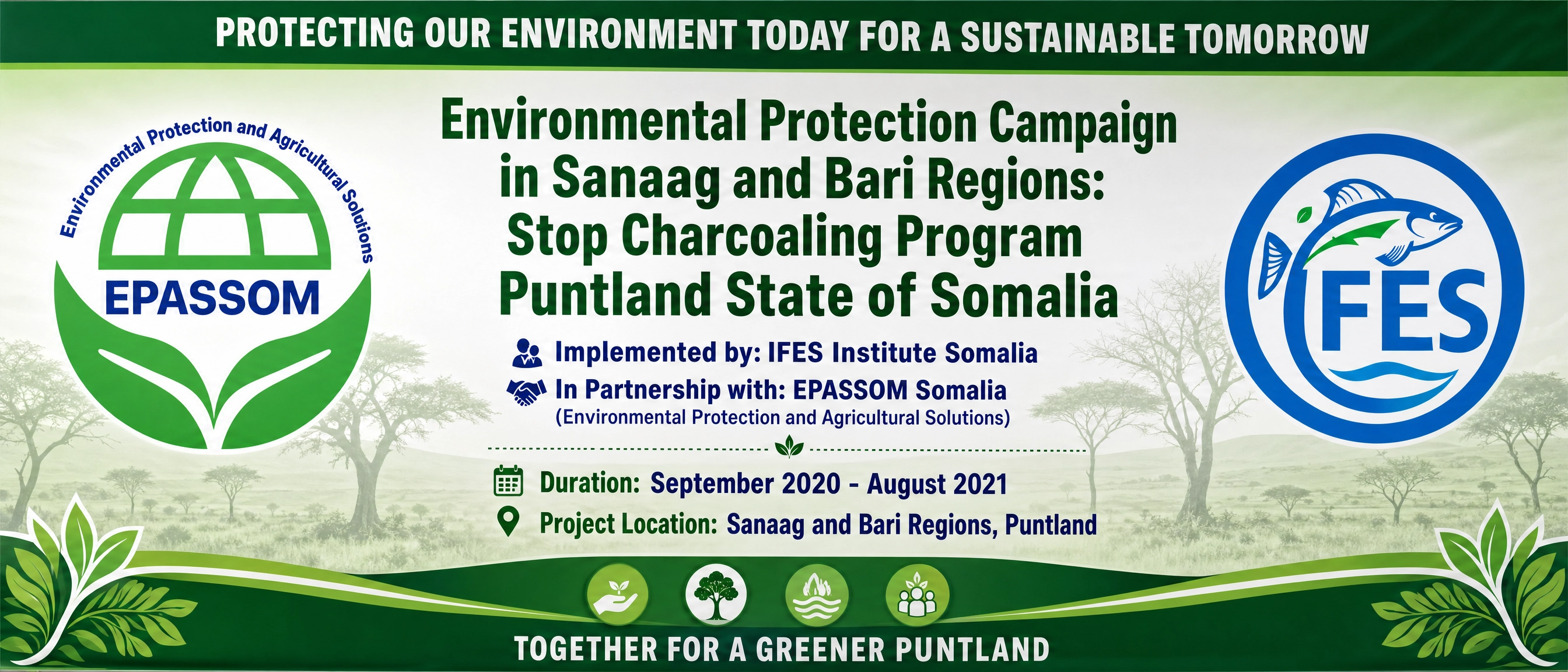
The “Stop Charcoaling Program” is a strategic environmental protection initiative implemented by IFES Institute Somalia in 2021 across key districts in the Sanaag and Bari regions of Puntland. The project was designed in response to rising environmental degradation driven by unsustainable charcoal production, which has significantly contributed to deforestation, loss of biodiversity, and increased climate vulnerability in these ecologically fragile dryland areas.
The intervention focused on rural and peri-urban communities where dependence on charcoal as a primary source of energy and income remains high. Through structured awareness campaigns, community dialogues, and stakeholder engagement, the project directly reached local leaders, youth groups, charcoal producers, and vulnerable households, promoting a deeper understanding of the environmental and socio-economic consequences of deforestation.
A core component of the initiative was to encourage behavioral change by promoting sustainable environmental practices and alternative livelihood options. Communities were engaged in discussions around natural resource management, ecosystem conservation, and the long-term benefits of reducing reliance on charcoal production. The program also strengthened collaboration with local authorities and civil society actors to support coordinated environmental protection efforts at the regional level.
As a result, the project contributed to increased community awareness, improved attitudes toward environmental conservation, and a gradual shift toward more sustainable practices. Local stakeholders demonstrated stronger commitment to protecting natural resources, while the campaign helped lay the foundation for future initiatives focused on climate resilience, ecosystem restoration, and sustainable economic opportunities.
The successful completion of the program marked an important milestone in advancing IFES Institute’s environmental agenda in Puntland. It reinforced the link between environmental protection and livelihood security, highlighting that sustainable development depends on preserving natural ecosystems while empowering communities to adopt resilient and environmentally responsible practices.